

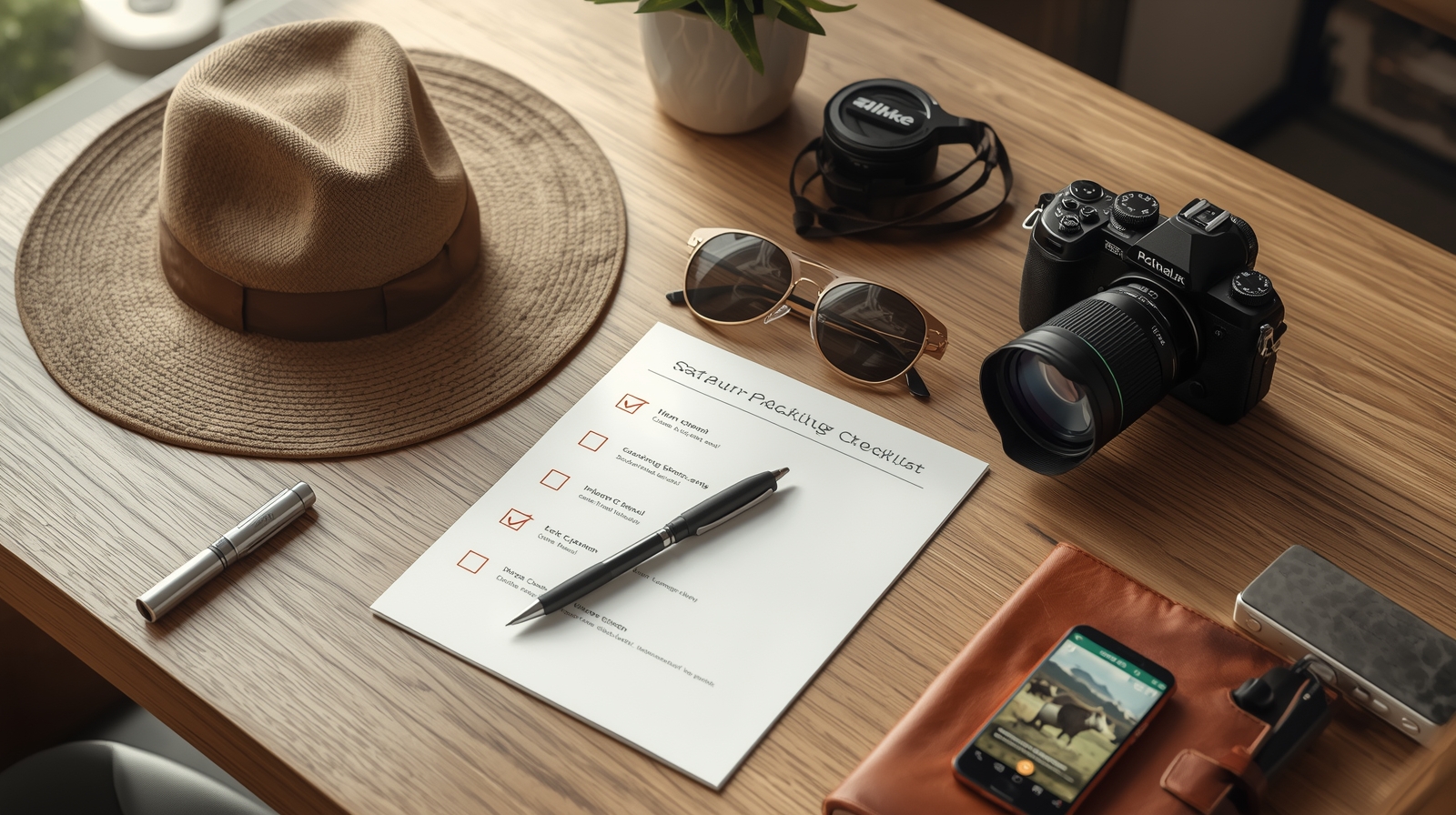
Why Your Safari Packing Checklist Is the Foundation of a Great Trip
Your safari packing checklist is the single most important piece of pre-trip preparation you will do. Get it right, and you arrive at your bush camp confident, comfortable, and fully equipped for every sunrise game drive. Get it wrong, and you risk excess baggage fines on bush flights, sun damage on open vehicles, missed wildlife shots because your camera battery died — or worse, a preventable health crisis 200 kilometres from the nearest pharmacy.
At Armani Tours and Travel, we have helped thousands of travelers build their safari packing checklist across Kenya, Tanzania, Uganda, Rwanda, Botswana, Zambia, and South Africa. What you are about to read is not a generic list copied from a travel blog. This is a field-tested, guide-verified safari packing guide built from real experience — from the high-altitude gorilla forests of Bwindi to the sweeping plains of the Serengeti.
We have structured this complete safari packing list by category so you can work through it methodically, tick items off, and arrive ready to focus entirely on Africa’s extraordinary wildlife.
Why Every Item on Your Safari Packing Checklist Deserves Careful Thought
Most people treat packing as an afterthought. On safari, it is strategic. You are traveling to wilderness environments where temperatures swing 20°C between a 5:30 a.m. game drive and a 2:00 p.m. rest. You may fly on a tiny Cessna Caravan. You will be exposed to intense equatorial sun, malaria-carrying mosquitoes, and dust so fine it penetrates every unsealed compartment in your camera bag.
A well-constructed africa packing list protects you in five critical ways:
Health & Safety
The right medications, sun protection, and insect repellent are non-negotiable in malaria-endemic wilderness zones.
Comfort Across Conditions
Layering is essential — safari environments shift from cold and misty at dawn to blazing hot by noon.
Wildlife Photography
The right camera gear means you never miss a rare sighting because you ran out of memory cards.
Luggage Compliance
Bush aircraft have strict weight and bag-type rules. A hard suitcase will not fit and will be left behind.
Wildlife Etiquette
Bright clothing disturbs animals and disrupts other guests. Neutral earth tones are considerate and effective.
Safari Packing Checklist at a Glance
Before diving into the detailed breakdown, use this master overview of your complete safari packing list. Full descriptions, expert recommendations, and quantities follow in each section below.
| Category | Items | Priority | Key Reason |
|---|---|---|---|
| Clothing & Footwear | 18 items | Critical | Thermal regulation & wildlife etiquette |
| Optics & Safari Gear | 10 items | Critical | Wildlife viewing & bush compliance |
| Photography Equipment | 9 items | High | Capturing sightings; dust & power management |
| Health, Medical & Hygiene | 16 items | Critical | Malaria prevention, sun protection, first aid |
| Documents & Money | 9 items | Critical | Entry requirements & financial access |
| Technology & Gadgets | 8 items | High | Communication, charging & navigation |
| Comfort & Miscellaneous | 9 items | Medium | Daily quality of life in the bush |
| Children & Family | 6 items | If Applicable | Age-specific health & engagement needs |
1. Clothing: The Most Discussed Part of Any Safari Packing Checklist
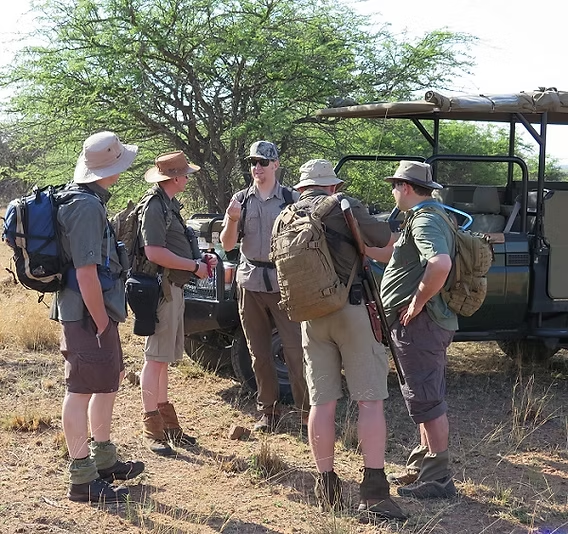
Clothing is where most first-time safari travelers make expensive mistakes. They pack too much, the wrong colors, or heavy cotton items that take two days to dry. The three principles of safari clothing are simple: neutral, lightweight, and layered.
The Safari Color Rule
Wildlife responds strongly to color contrast. High-contrast colors — white, bright blue, orange, red — create visual disruption in the bush. Tsetse flies are attracted specifically to dark navy and black.
Ideal safari clothing colors: khaki, tan, olive green, sage, sandy beige, muted brown, stone grey. These shades blend naturally with savannah grass, dry bush, and woodland environments.
Full Safari Clothing Checklist
- Lightweight long-sleeved shirts ×4 — Neutral tones; UPF 30+ for sun & insect coverage
- Short-sleeved shirts ×3 — For warm afternoon lodge time
- Convertible zip-off trousers ×2 — One pair doubles as shorts; great space-saver
- Lightweight hiking shorts ×1 — For hot afternoon activities
- Warm fleece or softshell jacket ×1 — Dawn drives are cold; often below 10°C Jun–Aug
- Windproof & waterproof outer shell ×1 — Essential for wet-season safaris
- Thermal base layer ×1 — For high-altitude destinations or cold-season Southern Africa
- Lightweight trail runners ×1 pair — Breathable, quick-drying; for lodge walks
- Sturdy ankle-support hiking boots ×1 pair — Required for walking safaris & gorilla tracking
- Flip flops or camp sandals ×1 pair — For lodge, pool area, and shower
- Wide-brim sun hat ×1 — Full brim is superior to a cap on open vehicles
- Buff or neck gaiter ×1 — Invaluable dust protection on dry-season tracks
- Lightweight liner gloves ×1 pair — For early morning winter game drives
- Moisture-wicking underwear ×6 pairs — Synthetic or merino wool; avoid cotton
- Merino wool or synthetic socks ×5 pairs — Anti-blister for walking days
- Swimsuit ×1 — Nearly every lodge and camp has a pool
- Smart casual outfit ×1 — Some upmarket lodges require semi-formal dress at dinner
- Lightweight sleepwear ×1 — Temperatures drop significantly overnight even in summer
2. Safari Gear & Equipment: What Veteran Travelers Never Leave Behind
Binoculars: The Single Most Important Item on Your Safari Packing List
If you take one piece of advice from this entire safari packing guide, let it be this: bring quality binoculars. Without them, you will miss half of what your guide spots. Animals are often 200–500 metres away. Binoculars bring them into sharp, detailed focus and allow you to read animal behaviour — a critical part of understanding what you are watching.
Recommended specification: 8×42 or 10×42. The first number is magnification; the second is objective lens diameter (mm). A larger objective lens gathers more light — essential at dawn and dusk when predators are most active.
Trusted brands used by professional field guides: Swarovski EL, Zeiss Terra ED, Nikon Monarch HG, Vortex Diamondback HD, Leupold BX-4.
Complete Safari Gear List
- Binoculars ×1 pair — 8×42 or 10×42 — non-negotiable on any safari packing checklist
- Headlamp with spare batteries ×1 — Essential after dark; choose one with a red-light mode to preserve night vision
- Soft-sided duffel bag ×1 — Maximum 15 kg; hard suitcases are refused on bush aircraft
- Day pack or game drive bag ×1 — Should close completely to keep out dust
- Packing cubes — set of 4 — Compression cubes save significant space inside your duffel
- Insulated reusable water bottle ×1 — Keeps water cold for 12 hours; reduces plastic waste
- Dust-proof dry bag or case — Protect cameras and electronics from pervasive fine dust
- Small padlocks ×2 — For zipper security on your duffel and room safe
- Lightweight collapsible umbrella ×1 — Wet season essential; also useful as shade on hot drives
- Multi-tool ×1 — Pack in checked luggage; invaluable for equipment repairs in the bush
3. Photography Gear for Your Safari Packing Checklist
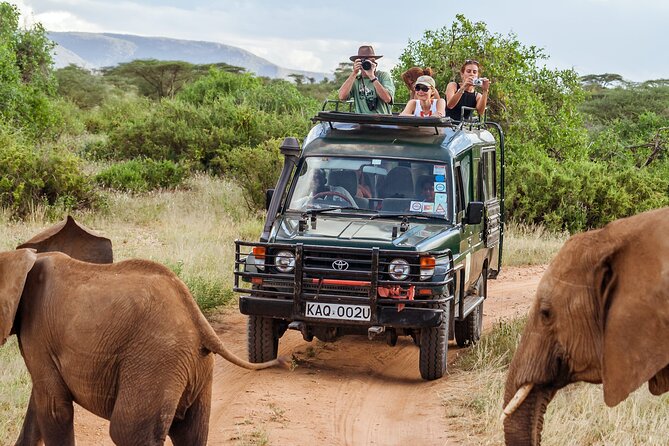
Poor photography equipment is one of the most common regrets among first-time safari travelers — and it is entirely avoidable. You do not need the most expensive camera. You do need sufficient zoom. The minimum useful focal length for safari photography is 300mm. Below 300mm, most animals appear frustratingly small in the frame.
Best all-round configuration: a DSLR or mirrorless body paired with a 100–400mm zoom lens. This covers everything from elephant herds to distant bird species.
- Camera body ×1 — DSLR, mirrorless, or bridge camera with minimum 300mm optical zoom equivalent
- Telephoto zoom lens — 100–400mm — optimal range for versatile safari photography
- Wide-angle lens — For landscape shots, camp photography, and group portraits
- Spare camera batteries ×3–4 — Some lodges lack power in guest rooms; charge all batteries every evening
- High-capacity memory cards ×4 — 64GB minimum each; 4K video fills a 32GB card in 45 minutes
- Portable solar charger or 20,000 mAh power bank — Invaluable at remote camps without mains electricity
- Camera cleaning kit — Blower, microfibre cloths, sensor swabs — fine African dust destroys sensors
- Bean bag or window-mount — Rests on vehicle door for stable long-lens shots; far better than a tripod in a moving vehicle
- Waterproof camera rain cover ×2 — Essential in wet season; cameras and rain do not mix
4. Health, Medical & Hygiene: The Non-Negotiable Section of Your Africa Packing List
No section of your africa packing list carries higher stakes than health and medical preparation. Begin planning this section 6–8 weeks before your departure. Some vaccinations require multiple doses over several weeks. Malaria prophylaxis must begin before you arrive in a risk zone.
Malaria Prevention: What You Must Know
Malaria is transmitted by the female Anopheles mosquito, which bites primarily at dusk and dawn — exactly when you are most likely sitting in an open game drive vehicle. The three main prophylaxis options:
| Medication | Dosing | Start Before Travel | Continue After |
|---|---|---|---|
| Atovaquone-Proguanil (Malarone) | Daily | 1–2 days before | 7 days after leaving |
| Doxycycline | Daily | 1–2 days before | 28 days after leaving |
| Mefloquine (Lariam) | Weekly | 2–3 weeks before | 4 weeks after leaving |
Complete Health, Medical & Hygiene Safari Packing List
- Prescription malaria prophylaxis — Start course before departure as directed
- DEET insect repellent ×2 bottles — 30–50% DEET; apply every 4–6 hours
- SPF 50+ sunscreen ×2 bottles — Equatorial UV index regularly exceeds 11
- SPF 30+ lip balm ×1 — Lips are almost always forgotten and burn badly
- Oral rehydration salts ×10 sachets — Dust, heat, and altitude combine to cause serious dehydration
- Antihistamine tablets & cream — For allergic reactions, insect bites, dust symptoms
- Ibuprofen and paracetamol — Pain relief, fever management, anti-inflammatory
- Antidiarrheal medication — Dietary change and unfamiliar water cause gastric disruption
- Probiotic supplements — Begin 2 weeks before travel to support gut health
- Antiseptic wipes and cream — Treat scratches and cuts from thorny bush immediately
- Blister plasters and bandages — For walking safari days across uneven terrain
- Prescription medications — full supply — In original containers; carry a doctor’s letter
- Mosquito head net ×1 — For sleeping in basic tented camps or outdoor dining
- Biodegradable soap and shampoo — Many conservancy lodges request eco-friendly products
- Hand sanitizer ×2 bottles — 70% alcohol minimum; clean water is often limited in the field
- Feminine hygiene products — full supply — Availability in remote towns is extremely limited
5. Documents & Money: Never Get Caught Out in the Bush
Losing a document in Nairobi is inconvenient. Losing one in a remote wildlife reserve is a genuine crisis. Apply a redundancy strategy — digital backups, physical copies stored separately from originals, and scans emailed to yourself before departure.
- Valid passport — Minimum 6 months validity beyond your scheduled return date
- Visas and entry permits — Check per-country requirements; some allow visa-on-arrival
- Yellow Fever vaccination certificate — Mandatory for Uganda; required if transiting through endemic countries before Kenya/Tanzania
- Comprehensive travel insurance policy — Must include emergency medical evacuation coverage
- Printed flight confirmations — Mobile signal at remote lodges is unreliable; paper copies are essential
- Safari booking confirmation — Armani Tours & Travel — Includes lodge contacts, guide names, and emergency numbers
- Embassy and emergency contact numbers — Home country embassy plus lodge, guide, and insurance lines
- Photocopies of all documents — Stored separately from originals; email digital scans to yourself
- Driver’s licence — If self-driving in South Africa, Namibia, or Zimbabwe
Money and Tipping on Safari
Cash remains essential. US Dollars are most widely accepted across East and Southern Africa. Carry a mix of denominations — $1, $5, $10, and $20 bills. Avoid worn, torn, or pre-2006 USD bills.
| Recipient | Standard Tip | Frequency |
|---|---|---|
| Safari Guide | $10–15 USD per vehicle | Per day |
| Tracker | $5–10 USD per vehicle | Per day |
| Lodge Camp Staff | $5–10 USD per person | Per day (tip box at checkout) |
| Transfer Driver | $5–10 USD | Per transfer |
6. Technology & Gadgets: Smart Additions to Your Safari Packing List
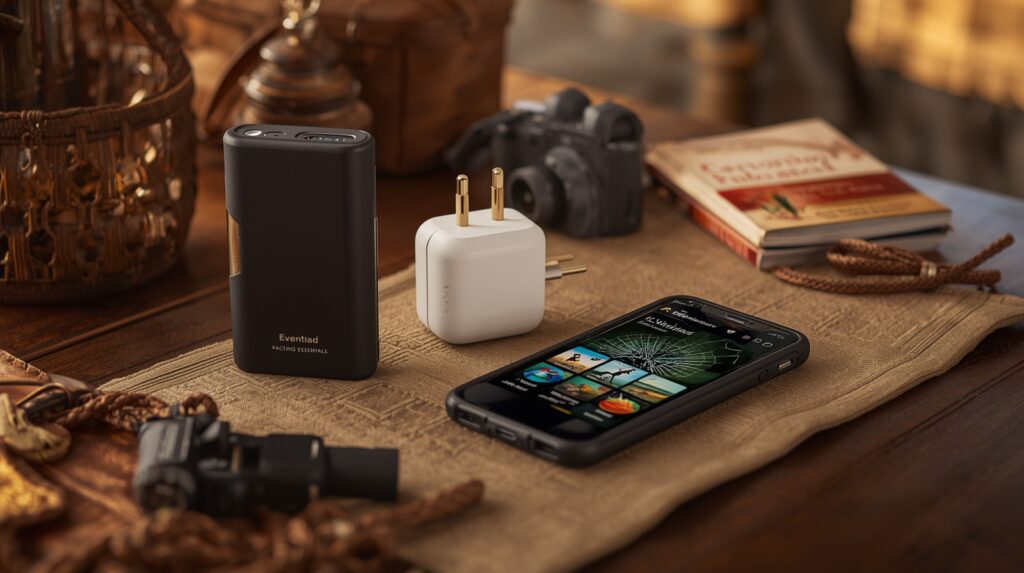
Technology on safari serves specific, practical purposes: communication, navigation, power management, wildlife identification, and photography. Pack selectively — every gram counts on bush flights. Choose dual-purpose items where possible.
- Smartphone — With offline maps, iNaturalist app for species identification
- Universal travel adapter ×1 — East Africa: UK 3-pin; Southern Africa: Type M round-pin
- High-capacity power bank 20,000 mAh — Charge phones, headlamps, and cameras between drives
- Solar charger panel ×1 — Invaluable at remote camps without mains electricity
- Noise-cancelling headphones ×1 — For long international flights and multi-hour transfer drives
- E-reader loaded with guidebooks — Replaces several kilograms of physical books
- Satellite communicator — Garmin inReach or SPOT for extremely remote destinations
- Laptop or tablet (optional) — Useful for backing up and culling images each evening
7. Comfort & Miscellaneous Items for Every Safari Packing List
- Earplugs ×5 pairs — Hippos, hyenas, and other wildlife are active at night
- Eye mask ×1 — Canvas tent walls are thin; 4:30 a.m. sunrise comes early
- Ziplock bags ×10 various sizes — Dust-proof storage; passport protection in rain
- Healthy snacks for long drives — Transfer drives can run 4–6 hours with no food stops
- Small notebook and quality pen — Record sightings and species lists; no battery required
- Regional wildlife field guide — Sinclair’s Birds of Eastern Africa; Kingdon’s Mammals of Africa
- Reusable shopping bags ×2 — Single-use plastic bags are banned in Kenya, Rwanda & Tanzania
- Small gifts for lodge staff — Pens and notebooks always welcomed; avoid money for children
- Travel pillow and lightweight blanket — For long bush flights and cold transfer vehicles
8. Adjusting Your Safari Packing Checklist for Families with Children
Family safaris are transformative experiences for children. But traveling with children in malaria zones and remote environments requires additional preparation beyond the standard what to bring to african safari list.
- Pediatric malaria prophylaxis — Children require weight-adjusted doses; always consult a travel medicine pediatrician
- Child-formulated SPF 50+ sunscreen — Children’s skin burns faster; reapply every 90 minutes in direct sun
- DEET-free insect repellent for children under 2 — Use Picaridin-based or plant-derived alternatives
- Junior binoculars ×1 per child — 8×21 junior models — children who can see what the guide sees are engaged children
- Age-appropriate wildlife field guide — Usborne Illustrated Encyclopedia of Animals for younger children
- Comfort item from home — A familiar toy; bush nights with unfamiliar sounds can be frightening for young children
What NOT to Pack: Items That Should Never Appear on Your Safari Packing Checklist
An effective safari packing guide is as much about what to leave behind as what to bring. Overpacking is the most common mistake, and several popular items are either impractical, prohibited, or actively counterproductive on safari.
| Item | Why It’s a Problem | Verdict |
|---|---|---|
| Camouflage clothing | Illegal for civilians in Kenya, Uganda, Zambia, Zimbabwe & Botswana. Can result in detention at borders. | ❌ Never pack |
| Bright or white clothing | White shows dust within minutes. Bright colors disturb wildlife and disrupt other guests. | ❌ Leave behind |
| Strong perfumes/colognes | Alert wildlife and attract biting insects. Impairs the walking safari experience significantly. | ❌ Leave behind |
| Hard-shell suitcases | Will not fit in bush aircraft baggage pods. Left at the airstrip without exception. | ❌ Never pack |
| Drones | Prohibited in all national parks without advance permits. Often confiscated at borders. | ❌ Never pack |
| Hair dryers & straighteners | Most lodges supply them. Wastes precious weight allowance. | ⚠️ Check first |
| Excessive valuables & jewellery | Security risk at camps; attracts unwanted attention; risk of loss in the bush. | ⚠️ Leave in hotel safe |
Destination-Specific Adjustments to Your Safari Packing Checklist
Africa is not a single environment. A one-size-fits-all safari packing list does not exist. Here is how to tailor your what to bring to african safari preparations by destination:
Kenya & Tanzania
🇰🇪🇹🇿The Masai Mara and Serengeti are the world’s most famous safari destinations. Dawn game drives start at 5:30 a.m. and temperatures at this hour can be as low as 8–10°C even during the hot season.
- Extra camera memory cards (Migration crossings are worth thousands of frames)
- Dust-proof storage for all electronics (dry season tracks are extremely dusty)
- Serious warm layer for 5:30 a.m. game drives
Uganda & Rwanda (Gorilla Tracking)
🇺🇬🇷🇼Gorilla tracking is physically demanding hiking in dense tropical forest at 1,500–2,500m altitude. Treks can last 1–8 hours through steep, muddy terrain in Bwindi or Volcanoes National Park.
- Waterproof hiking boots with ankle support (non-negotiable)
- Waterproof gaiters for deep mud sections
- Sturdy gardening gloves for gripping vegetation on steep slopes
Botswana (Okavango, Chobe)
🇧🇼Botswana hosts some of Africa’s most exclusive experiences including mokoro (dugout canoe) activities on the Okavango Delta and world-record elephant concentrations on the Chobe River.
- Water-resistant clothing and dry bags (mokoro activities will get you wet)
- Light thermal layers for Kalahari nights
- Serious telephoto lens for Chobe’s elephant herds
South Africa (Kruger, Eastern Cape)
🇿🇦South Africa is the most accessible safari destination for first-time travelers. Some Eastern Cape reserves (Addo, Shamwari, Amakhala) are completely malaria-free — ideal for families or those who cannot take prophylaxis.
- Malaria prophylaxis still required near Kruger & private reserves
- Serious warm layers for Jun–Aug — nights drop to 5°C in the bushveld
- Driver’s licence if self-driving on excellent Kruger road network
Seasonal Safari Packing Adjustments
| Season / Period | Destination | Key Safari Packing Checklist Additions |
|---|---|---|
| Dry Season (Jun–Oct) | East Africa | Extra dust bags, camera cleaning kit, thermal layers for dawn drives, Buff/gaiter daily |
| Wet / Green Season (Nov–May) | East & Central Africa | Waterproof jacket, gaiters, dry bags for all electronics, waterproof phone case |
| Winter (Jun–Aug) | South Africa, Botswana, Zambia | Heavy fleece, thermal base layer, windproof jacket, liner gloves — below 5°C possible |
| Great Migration (Jul–Oct) | Serengeti / Masai Mara | Maximum memory cards, 2nd camera body, positioned long lens for river crossings |
| Gorilla Trekking (Year-round) | Uganda, Rwanda | Waterproof hiking boots, gaiters, rain jacket, gardening gloves |
Real-World Expert Opinions: What Professional Safari Guides Actually Pack
We asked four of Armani Tours and Travel’s senior field guides — each with more than a decade of experience — what items they personally never travel without and the mistakes they most often see clients make.
My binoculars come first, before anything else. I have watched guests without binoculars sit on a game drive for three hours and miss 60% of what I am calling out because they simply cannot see it clearly at distance. Binoculars are not optional. They are the single most important item on any safari packing list.
— Senior Wildlife Guide, Masai Mara — 16 years’ experienceA sealed, dust-proof bag for the camera. The dust on a dry-season game track in the Serengeti is like fine talcum powder. It gets inside everything. I have watched guests destroy expensive cameras in a single morning because they were not protected. A good dry bag prevents that entirely.
— Photography & Wildlife Guide, Northern Serengeti — 11 years’ experienceMerino wool base layers. Not cotton. Not a cheap synthetic. Merino wool. They work in cold at 5 a.m. and they do not smell after three consecutive days of wear. On a 10-day safari, that matters more than guests realise before they experience it.
— Walking Safari Lead Guide, Luangwa Valley, Zambia — 13 years’ experiencePack light, wash often, and spend the weight you saved on better optics. Nobody ever came off a game drive wishing they had packed more clothes. But guests who borrowed binoculars consistently said it was the thing that changed their entire safari.
— Head Guide and Regional Manager, Armani Tours & TravelStep-by-Step: How to Build and Execute Your Safari Packing Checklist
Using a safari packing list is not enough. You need a systematic process that eliminates errors and controls weight. Here is the Armani Tours and Travel recommended packing strategy:
- 6–8 Weeks Before — Medical PreparationBook your travel medicine consultation. Start vaccinations if required. Get your malaria prophylaxis prescription. Begin probiotic supplementation to support gut health.
- 4–5 Weeks Before — Gear AcquisitionSource binoculars if you do not own a quality pair. Order camera accessories — bean bag, dry bags, extra batteries, memory cards. Purchase quick-dry clothing if needed.
- 2–3 Weeks Before — Document PreparationConfirm visa requirements per country. Print all booking confirmations. Scan passport, visa, Yellow Fever certificate, and insurance — email copies to yourself and a trusted contact at home.
- 1 Week Before — The Full Lay-OutLay every item on your bed. Weigh everything. If your packed duffel exceeds 15 kg, remove the heaviest non-critical items. Most commonly removed: excessive clothing, full-size toiletries, heavy books.
- 3 Days Before — Final ChecksCharge all electronic devices. Download offline maps for your destination. Confirm all flight and transfer details with Armani Tours and Travel. Verify medications are in your hand luggage.
- Packing Day — Photograph EverythingBefore closing your bag, photograph the contents spread out on the bed. Email the photo to yourself. This record is essential for insurance claims if luggage is lost or delayed.
- At the Airport — Hand Luggage Is SacredDocuments, medications, camera (if valuable), power bank, and one change of clothing go in hand luggage. Never check these through. Your hand luggage is always with you.
Pros & Cons: Common Safari Packing Decisions
| Packing Decision | Pros | Cons | Armani Recommendation |
|---|---|---|---|
| Hard suitcase vs soft duffel | Better protection for fragile items | Refused on bush aircraft without exception | Always use soft duffel for any safari itinerary |
| Cotton vs synthetic clothing | Comfortable; breathable in heat | Dries slowly; heavy when wet; no insulation when damp | Choose merino wool or lightweight synthetics |
| DSLR vs smartphone camera | DSLR: superior image quality and zoom | Heavier; more fragile; requires more accessories | DSLR for photography-focused trips; smartphone for casual |
| Carry-on-only strategy | No lost bags; faster airport connections | Requires strict weight discipline | Feasible for 5–7 night trips with laundry access |
| Physical books vs e-reader | No battery; tactile pleasure | Heavy; limited to 1–2 books per kg of allowance | E-reader loaded with field guides and novels |
Ready to Start Planning Your Safari?
Armani Tours and Travel designs tailor-made African safari experiences across Kenya, Tanzania, Uganda, Rwanda, Botswana, Zambia, and South Africa. From building your personalised safari packing list to booking every lodge, flight, and transfer — we handle everything.
Your Safari Packing Checklist Is Your Ticket to a Flawless Safari
A great safari begins before you ever reach the airport. The time you invest in building and executing a comprehensive safari packing checklist pays dividends from the moment you arrive at your first bush camp. You are comfortable on cold dawn drives. Your camera is charged and protected when a leopard drops from a tree 30 metres from your vehicle. Your medications are in your pocket when the guide asks if everyone is ready for the walking trail.
This safari packing guide has covered every essential category: clothing, safari gear, photography equipment, health and medical supplies, documents, technology, comfort items, destination-specific adjustments, and seasonal calibrations. Use it as your master reference. Customise it for your specific itinerary and the season you are traveling in.
The safari packing checklist you build today is the foundation of the safari experience you will remember for decades. Africa rewards the prepared traveler — with exceptional sightings, extraordinary encounters, and the kind of quiet confidence that comes from knowing you have everything you need, exactly where you need it.
Frequently Asked Questions About Safari Packing Checklists
Binoculars are the single most critical item on any safari packing checklist. A quality 8×42 or 10×42 pair allows you to observe wildlife in detail at distances where animals behave naturally. Professional field guides consider binoculars more important than any camera. Without them, you will miss the majority of what your guide spots — particularly birds, smaller mammals, and distant predators at dawn and dusk.
Most scheduled bush flights and charter aircraft enforce a strict 15 kg (33 lb) total weight limit per passenger, including hand luggage. All bags must be soft-sided — hard-shell suitcases are refused at the airstrip without exception. Some carriers allow 20 kg on specific routes. Always confirm with Armani Tours and Travel before packing, as allowances vary by aircraft type and route.
Wear neutral earth tones: khaki, tan, olive green, sage, muted brown, stone grey, and sandy beige. Avoid white (shows dust immediately), bright colors including red, orange, and bright blue (startle wildlife), dark navy and black (attract tsetse flies in some regions), and any camouflage pattern (illegal for civilian use in Kenya, Uganda, Zambia, Zimbabwe, and Botswana).
For most safari destinations in sub-Saharan Africa, yes. Malaria is endemic across the Masai Mara, Serengeti, Okavango Delta, Chobe, Lower Zambezi, and most Kruger-adjacent reserves. Notable exceptions include the malaria-free Eastern Cape reserves in South Africa (Addo, Shamwari, Amakhala). Consult a travel medicine doctor at least 6–8 weeks before departure to get the appropriate prescription for your specific itinerary.
At minimum: a camera with 300mm+ optical zoom, three to four spare batteries, four 64GB memory cards, a camera cleaning kit for dust, and a bean bag or vehicle window mount for stable shots. The optimal configuration is a DSLR or mirrorless body paired with a 100–400mm zoom lens. This covers everything from elephant herds to distant bird species in a single versatile package.
No, not as a general rule. Most established safari lodges provide safe filtered or bottled drinking water. In remote areas or during bush walks, drink only from the sealed bottles your camp provides. Carry water purification tablets or a UV purifier (SteriPen) as a backup. Carry at least one litre of water per person for every two hours of outdoor activity — dehydration is a genuine health risk in hot, dusty environments.
Never pack camouflage clothing (illegal for civilians in multiple African countries), hard-shell suitcases (refused on bush aircraft), drones without special permits (prohibited in virtually all national parks), strong perfumes (disturb wildlife on walking safaris), or white and bright-colored clothing. Also avoid packing hair styling appliances — most lodges supply them and they waste critical weight allowance.
Pack 5–6 days of clothing for a 12-day safari and plan to use the laundry service. Most quality safari lodges offer same-day laundry. Quick-dry synthetic or merino wool fabrics can be washed and dried overnight by lodge staff. This strategy is far more practical than packing 12 days of clothing and blowing your entire weight allowance on clothes.
Travel insurance is absolutely essential. Your policy must include emergency medical evacuation coverage. Evacuation from a remote bush camp to a major hospital typically costs $30,000–$80,000 USD without insurance. Armani Tours and Travel requires confirmation of adequate travel insurance before finalising any booking that includes remote wilderness destinations.
In major gateway cities — Nairobi, Dar es Salaam, Cape Town, Johannesburg — you can find most basic items. However, once inside a national park or remote conservancy, the lodge shop is your only option at significant price premiums. Quality binoculars, specific camera batteries, prescription medications, and specialist safari gear may not be available at all in remote areas. Use your safari packing checklist thoroughly before you leave home.
