

27 Best Things To Do In Masai Mara: The Ultimate Expert Guide (2026)
The things to do in Masai Mara go far beyond watching animals from a vehicle — they encompass some of the most transformative outdoor experiences on the planet. Kenya’s Masai Mara National Reserve is not just Africa’s most celebrated wildlife destination; it is a living, breathing ecosystem spanning 1,510 square kilometres where the rules of the natural world still apply in their most raw, unfiltered form. Every sunrise here carries the possibility of witnessing something that no film, no documentary, and no photograph can ever fully prepare you for.
At Armani Tours and Travel, we have spent over a decade designing and guiding safari experiences in the Mara. Our field guides average eight years of experience inside the reserve. This guide draws directly from that knowledge — not from a travel brochure, but from thousands of hours observing animal behaviour, tracking predators, and sitting with visitors at the exact moment the Mara reveals itself. Whether you’re planning your first safari or your fifth, this is the most comprehensive guide to things to do in Masai Mara available anywhere.

🛻🦁 Discovering the Best Things To Do In Masai Mara — Up Close with Lions on a 4×4 Game Drive
🦁 Ready to Experience the Masai Mara?
From game drives and balloon safaris to cultural immersion — Armani Tours and Travel builds the perfect Masai Mara itinerary for every traveller.
Available 7 days a week · Response within 2 hours · No commitment quote
Why the Masai Mara Belongs on Every Serious Traveller’s List
Before diving into specific things to do in Masai Mara, it helps to understand what makes this reserve uniquely compelling — even compared to other world-class safari destinations like the Serengeti, Kruger, or Okavango.
Reserve Area
1,510 km²
core reserve
Wider Ecosystem
25,000 km²
Mara-Serengeti
Bird Species
570+
recorded
Lion Population
400–500
individuals
Wildebeest
1.5M+
during migration
Cheetah Sight.
~80%
over 3-day visit
What Sets the Masai Mara Apart
- Highest predator density in Africa. The Masai Mara supports more lions, leopards, cheetahs, and hyenas per square kilometre than almost any other reserve on the continent.
- Year-round wildlife. Unlike migratory-only destinations, the Mara maintains resident populations of all major species throughout the year. The things to do in Masai Mara are exceptional in every season.
- Accessible and well-serviced. Just 270 kilometres from Nairobi, with a well-developed network of guides, camps, and infrastructure across all budget levels.
- Cultural richness. The Maasai people have coexisted with wildlife here for centuries. Cultural experiences alongside wildlife encounters make for a far richer visit.
- The Great Migration. July to October brings the world’s largest overland animal movement — a phenomenon available nowhere else on this scale.
The Masai Mara doesn’t just show you Africa — it pulls you into it. Every visit changes something in the way you see the natural world.
— James Kamau, Senior Field Guide, Armani Tours and Travel (14 years in the Mara)1. Masai Mara Game Drives — The Foundation of Every Safari
No list of things to do in Masai Mara begins anywhere other than the game drive. Masai Mara game drives and wildlife viewing is what built the reserve’s global reputation, and for excellent reason. A properly guided game drive in the Mara is not a passive bus tour — it is an active, expert-led wildlife investigation conducted in a purpose-built 4×4 vehicle with a 360-degree pop-up roof, driven by a guide who has spent years learning the terrain, the animals, and the rhythms of this specific ecosystem.
Morning Game Drives (6:00 AM – 10:00 AM)
Morning drives are the most productive session of any day in the Mara. Here’s why they matter for Masai Mara game drives and wildlife sightings:
- Predators are often still active from nocturnal hunts. Lions may still be on a kill, cheetahs scanning from termite mounds, leopards alert in tree branches
- Cool temperatures mean prey animals are moving freely, creating natural predator-prey scenarios
- The golden hour light (6:00–8:00 AM) is optimal for photography
- Fewer tourist vehicles in the first 90 minutes — prime sightings with fewer crowds
- Radio networks between guides begin relaying fresh animal locations from dawn patrols
Afternoon Game Drives (4:00 PM – 7:00 PM)
The second most productive session of Masai Mara game drives and wildlife encounters. As the heat breaks around 3:30 PM, activity surges across the reserve:
- Lions stir from shade to patrol, mate, and prepare for evening hunts
- Elephants head to watering points in coordinated family groups
- Cheetahs begin active stalking runs on the open plains
- The evening golden hour (5:00–7:00 PM) produces the most dramatic photographic light of the day
- Afternoon drives often conclude with sundowner stops — drinks at sunset in the bush
Full-Day Game Drives
For serious wildlife enthusiasts, full-day drives with packed lunches allow you to cover the most ground and remain in the field during midday hours — valuable when tracking specific animals. If a leopard was sighted with a fresh kill at 9 AM, staying nearby increases your chance of observing feeding and cub interactions that typically occur between 11 AM and 2 PM.
| Drive Type | Hours | Best For | Typical Sightings |
|---|---|---|---|
| Morning Drive | 6:00–10:00 AM | Predator activity, photography | Lions on kills, cheetah hunts, active herds |
| Afternoon Drive | 4:00–7:00 PM | Elephant movements, golden light | Elephant groups, lion prides, sundowner |
| Full-Day Drive | 6:00 AM–6:30 PM | Migration, tracking, photography | All species, river crossings, leopard trees |
| Bush Breakfast Drive | 6:00–11:00 AM | Families, luxury experience | Dawn wildlife + outdoor breakfast in the Mara |
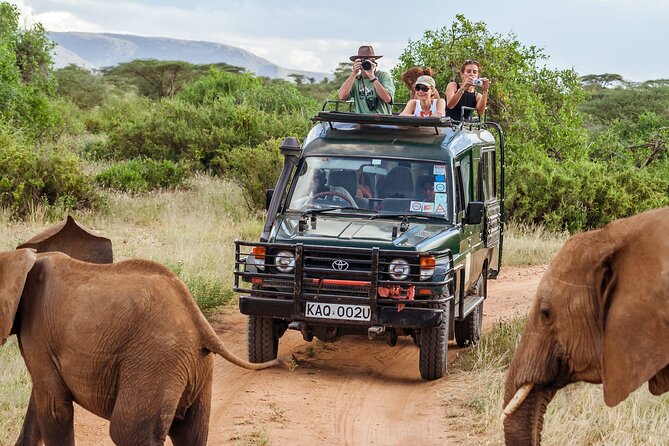
🧭 A Professional Armani Tours Guide Leads a 4×4 Game Drive — One of the Best Things To Do In Masai Mara
2. Witness the Masai Mara Great Migration Season
If Masai Mara game drives and wildlife viewing is the foundation of a safari here, then the Masai Mara Great Migration season is its defining crown. No other natural event on Earth concentrates this volume of animals — approximately 1.5 million wildebeest, 500,000 zebras, and 200,000 Thomson’s gazelles — into a corridor of land where they must cross predator-patrolled rivers to survive. It is, without exaggeration, one of the most extraordinary things to do in Masai Mara.
Understanding the Migration Cycle
The Masai Mara Great Migration season is not a single event — it is a continuous circular journey. The herds follow rainfall and fresh grass across a 3,000-kilometre loop between Tanzania’s Serengeti and Kenya’s Masai Mara:
📅 Migration Timeline — When to Be Where
- January–March: Calving season in southern Serengeti. Over 500,000 wildebeest calves born within a six-week window — peak predator action
- April–June: Herds move through central and western Serengeti following rains northward
- July–August: The front of the migration reaches the Mara River. First Mara crossings begin — the most dramatic phase of the Masai Mara Great Migration season
- September–October: Peak crossing season. Multiple crossings per day possible. Maximum wildlife density in the reserve
- November: Herds begin retreating south as rains return to Tanzania
- December: Most wildebeest back in Serengeti for calving preparation
The Mara River Crossing — Nature’s Most Dramatic Scene
The Mara River crossing is the centrepiece of the Masai Mara Great Migration season. This is what visitors travel from every corner of the world to witness. Here is what actually happens:
Thousands of wildebeest gather at the riverbank in agitated masses, hesitating for anywhere from 30 minutes to six hours. They sense the crocodiles waiting below. The front animals are repeatedly pushed forward by the pressure of the crowd behind them.
Suddenly, one wildebeest commits. The entire herd follows in a thunderous cascade — thousands of animals plunging into the current simultaneously. The noise, dust, and spray create a sensory experience unlike anything else in the natural world.
Nile crocodiles — some exceeding 5 metres and 700 kilograms — launch from the water. Lions pace the far bank. The survival calculation plays out in real time. Most animals cross safely; some do not. The entire event can last from 20 minutes to several hours for a large herd.
Survivors shake themselves off and immediately begin grazing on the fresh Mara grass, seemingly oblivious to what just occurred. For visitors, the silence after a crossing — broken only by crocodiles returning to their positions — carries an emotional weight few other wildlife experiences match.
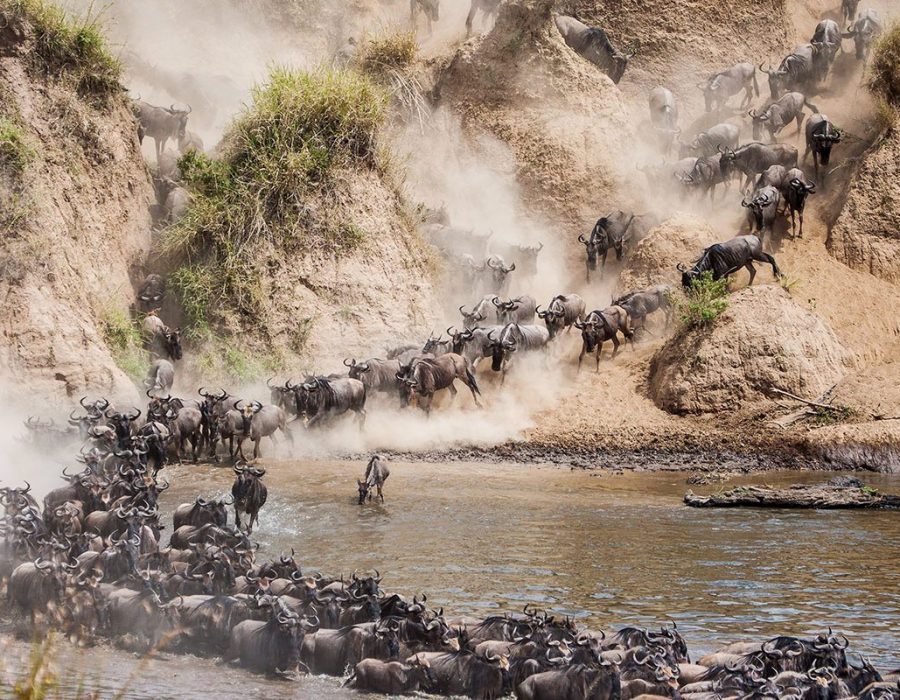
🐃🌊 Thousands of Wildebeest Crossing the Mara River — Peak Masai Mara Great Migration Season
3. Hot Air Balloon Safari Masai Mara — A Perspective You’ll Never Forget
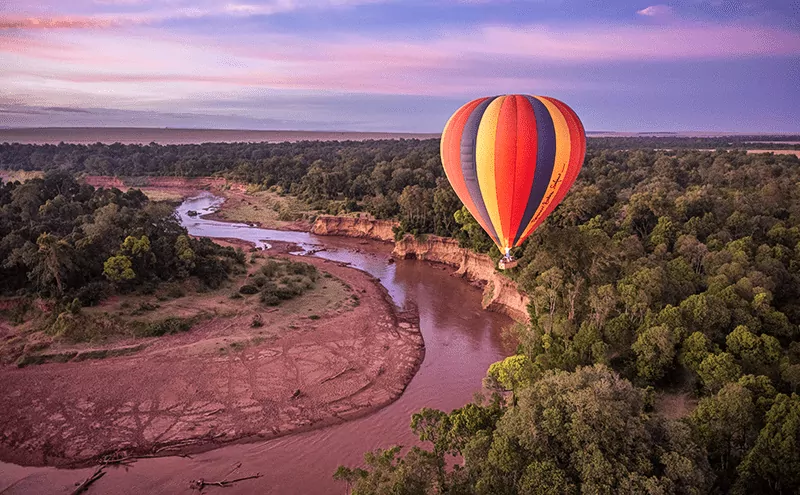
The hot air balloon safari Masai Mara experience is, for many visitors, the single most memorable hour of their entire Africa trip. No other activity delivers the combination of perspective, silence, and intimacy with the landscape that a dawn balloon flight provides. This is one of the things to do in Masai Mara that transcends ordinary wildlife tourism — it becomes a life reference point.
What Happens During a Balloon Safari
Pre-Dawn Briefing (5:00 AM)
Guests are transferred from their camp to the launch site in pre-dawn darkness. A safety briefing covers boarding and landing procedures. The balloon is already being inflated — a spectacle in itself, with the envelope glowing against the dark sky.
Lift-Off at First Light (6:00–6:15 AM)
The basket rises silently into the dawn as the sun breaks the horizon. The first sight — the entire Mara ecosystem laid out below in the golden light — triggers an involuntary silence in most passengers. Guides report that experienced travellers who have seen the Mara many times from the ground are consistently stunned by this first aerial view.
The One-Hour Flight
The pilot steers with the wind, drifting over herds of wildebeest, elephant families at watering holes, and — if timing aligns — hippos returning to the river from their nocturnal grazing. During the Masai Mara Great Migration season, the aerial view of herds moving across the plains is genuinely overwhelming in scale.
Bush Champagne Breakfast
After landing, a full breakfast is served in the bush — tables set on the open plains with white linens and silverware. Champagne or sparkling juice is poured. A flight certificate is presented. Many guests describe this as the most unexpectedly moving meal of their lives.
Hot Air Balloon Safari — Key Facts
- Cost: $450–$500 per person. Includes flight, champagne breakfast, and flight certificate.
- Duration: Approximately 1 hour in the air. Total experience including breakfast is 3–4 hours.
- Best season: Year-round, but July–October during the Masai Mara Great Migration season adds the spectacle of herds from above.
- Booking: Requires advance booking — 48 hours minimum, longer during peak season. Armani Tours and Travel can add this to any safari package.
- Weight limit: Typically 100–110 kg per passenger. Confirm with operator at booking.
- Weather: Flights proceed in most conditions. Strong winds may cause rescheduling — not cancellation. Pilots have very high standards here.
✅ Why You Should Do It
- Aerial perspective impossible from vehicles
- Complete silence — no engine noise
- Unique photography angles
- Champagne breakfast adds luxury to the experience
- Operates year-round
- Memories outlast every ground-level sighting
⚠️ Things to Know
- Early wake-up (4:30–5:00 AM) required
- Standing basket — not suitable for mobility issues
- Premium cost on top of safari package
- Weather-dependent (rarely cancelled)
- Not included in standard safari rates
4. Masai Mara Walking Safari — The Most Intimate Wildlife Experience
A Masai Mara walking safari fundamentally changes your relationship with the African wilderness. In a vehicle, the ecosystem flows past you. On foot, you step into it. The scale of everything shifts. A buffalo becomes immense. A termite mound becomes a city. Tracks in the dust tell a story that no engine-running 4×4 can read at speed. This is one of the most profound things to do in Masai Mara — and one of the most misunderstood.
Where Walking Safaris Operate
Walking safaris are not permitted inside the core Masai Mara National Reserve. However, the private conservancies bordering the reserve offer outstanding walking experiences:
- Naboisho Conservancy — 50,000 acres of community-managed wilderness. Exceptional walking terrain with lower vehicle density.
- Olare Motorogi Conservancy — Premium conservancy with dedicated walking guides and high predator concentration.
- Mara North Conservancy — Bordering the Laikipia Plateau ecosystem. Diverse terrain ideal for longer walking routes.
- Lemek Conservancy — Community-owned land where walking fees directly support Maasai families and wildlife protection.
What a Walking Safari Actually Involves
A Masai Mara walking safari is led by a Kenya Wildlife Service-certified armed ranger alongside your guide. Typical walks last 2–3 hours and cover 5–8 kilometres. Here is what you actually experience that vehicle safaris cannot offer:
- Track reading: Your guide shows you lion pugmarks, hyena scat, elephant dung revealing their diet, and the compressed grass where a leopard slept hours before
- Plant ecology: The medicinal plants used by Maasai healers, the difference between whistling thorn and umbrella thorn acacias, the dung beetle’s extraordinary role in soil health
- Insect and reptile world: The life systems invisible from a vehicle — agama lizards, chameleons, hornbills at eye level, weaver bird nests constructed with architectural precision
- Scent and sound: The Mara at close range engages all five senses simultaneously. Dust, grass pollen, distant wildebeest bellowing, the specific smell of buffalo proximity
- Physical awareness: Walking in big game country activates an atavistic alertness most modern humans have never experienced. It is legal and safe — but it is real
A walking safari isn’t about getting closer to dangerous animals. It’s about learning to read the landscape that those animals live in. After a three-hour walk, visitors understand the Mara in a way that no amount of driving can teach.
— Peter Omondi, Walking Safari Specialist, Armani Tours and Travel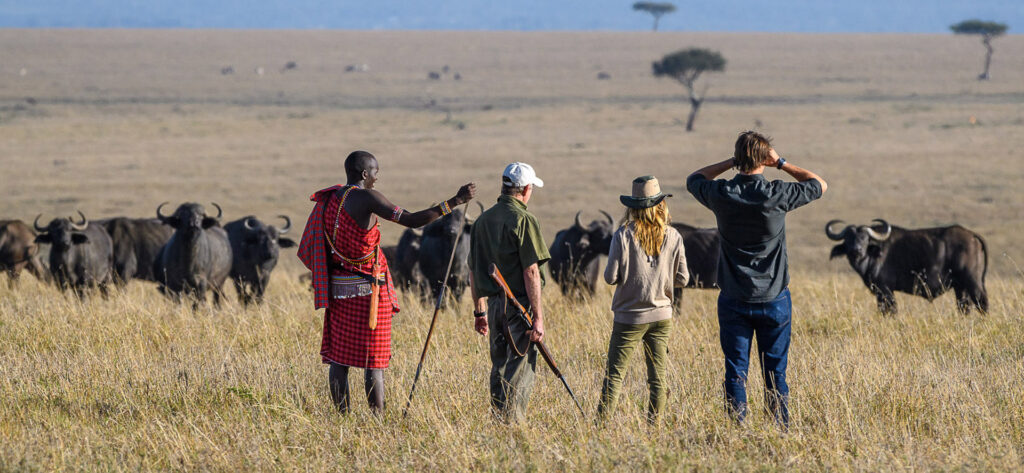
🦶 A Masai Mara Walking Safari Offers Unmatched Intimacy with the Wilderness — Things To Do In Masai Mara for the Adventurous
5. Masai Mara Cultural Village Experience — Meet the People of the Mara
The Masai Mara cultural village experience is one of the things to do in Masai Mara that many first-time visitors underestimate — and nearly every returning visitor specifically requests. The Maasai people are not peripheral to the Masai Mara story; they are central to it. Their pastoral traditions, their relationship with wildlife, and their extraordinary cultural resilience in the face of 21st-century pressures make a genuine cultural exchange one of the most enriching experiences available here.
What a Genuine Village Visit Looks Like
A high-quality Masai Mara cultural village experience is not a staged performance — it is an organised exchange between visitors and a community that chooses to share its way of life. Here is what a well-facilitated visit involves:
A manyatta is a circular compound of mud-and-dung houses (enkaji) enclosed by a thorny acacia fence to protect livestock from predators at night. You enter through a single opening and immediately encounter the compact, sensory-rich world of traditional Maasai domestic life.
The structure of an enkaji is deliberately designed for the semi-nomadic lifestyle — built rapidly, maintained simply, and abandoned when the community moves to new grazing grounds. Guides explain this architecture and its relationship to the pastoral economy.
Maasai elders demonstrate the traditional fire-starting technique using two specific hardwood sticks — a method refined over centuries before matches existed. The friction technique requires specific wood, specific technique, and specific timing. Many visitors attempt it; very few succeed without years of practice. The elder’s casual speed is humbling.
The adumu is the iconic Maasai jumping ceremony performed by junior warriors (moran). Young men compete to jump highest from a standing position — no run-up, pure vertical power developed through years of practice. The hypnotic chanting that accompanies the jumps is produced collectively, with voices interlocking in extraordinary rhythmic complexity. Visitors are typically invited to join, which provides both entertainment and a genuine respect for the athletic training involved.
Maasai beadwork carries profound cultural meaning. The colours and patterns communicate marital status, age-set rank, and tribal affiliation. Women demonstrate the creation process and present pieces for purchase. Buying directly from artisans rather than hotel gift shops ensures that money reaches the community. Prices are negotiable — Maasai women are skilled traders, and the exchange itself is part of the cultural experience.
How to Have a Respectful, Meaningful Visit
- Always ask permission before photographing individuals — a small tip ($1–2) is appropriate and appreciated
- Dress modestly — covered shoulders and knees show respect for community norms
- Listen to introductions before forming opinions — context transforms everything
- Do not give sweets, pens, or money to children — this creates dependency and teaches transactional relationships with visitors
- Purchase crafts and be prepared to negotiate — the exchange is cultural, not commercial exploitation
- Ask your Armani Tours guide to translate during ceremonies — details make the experience far richer
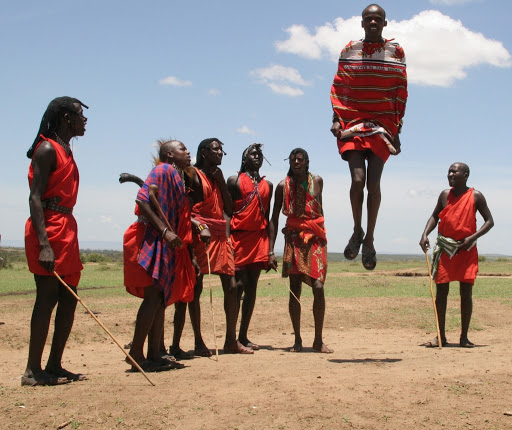
🛡️ A Maasai Warrior During a Cultural Village Visit — Among the Most Rewarding Things To Do In Masai Mara
6. Masai Mara Sundowner Bush Picnic — The Art of the African Sunset
The Masai Mara sundowner bush picnic is one of those experiences that sounds simple and turns out to be unforgettable. As the afternoon game drive winds down and the sun begins its descent toward the horizon, your guide pulls the vehicle to a strategic scenic point — often a ridge overlooking the plains, a river bend, or an elevated kopje with 180-degree views — and produces drinks, glasses, and a spread of snacks from the cool box.
The Masai Mara sundowner bush picnic tradition stretches back to the early professional hunting era of the 1900s, when hunters and their guests would end the day with drinks in the field. Today it has evolved into a quintessential moment of every well-run safari — a deliberate pause between the intensity of game driving and the warmth of camp dinner.
Why the Sundowner Matters
- The light between 5:30 PM and 6:30 PM in the Mara is extraordinary — warm amber and crimson tones that transform the landscape into something painterly
- Silhouettes of giraffes, elephants, or acacias against a burning sky create iconic visual moments
- Wildlife activity increases sharply at this hour — lions begin moving, predators emerge from shade
- The emotional decompression of a drink in the open bush, with only the sounds of the Mara around you, is unlike any bar or restaurant on Earth
- It creates a natural narrative pause — the day’s sightings become stories shared in the golden light
What a Premium Sundowner Includes
🥂 Standard Sundowner Package
- Selection of wines, beers, and spirits or non-alcoholic options
- Canapes and light snacks prepared by camp kitchen
- Guide stops engine and opens roof for full 360-degree views
- Duration: 30–45 minutes
- Included in most Armani Tours and Travel safari packages
🍽️ Elevated Bush Picnic Dinner
- Full dinner service in the open bush — tables, linens, candlelight
- Three-course meal prepared by camp chefs and transported to location
- Star-filled sky overhead, sounds of the Mara around you
- Available at luxury camps and on private safari packages
- Arrange in advance with Armani Tours — minimum 24 hours notice

🥂🌅 The Masai Mara Sundowner Bush Picnic — One of the Most Magical Things To Do In Masai Mara
7. Bird Watching in Masai Mara — 570+ Species Await
For many visitors, bird watching surprises them by becoming one of the most rewarding things to do in Masai Mara. The reserve records over 570 species — a number that rivals dedicated birding destinations three times its size. From the martial eagle (Africa’s most powerful raptor) to the lilac-breasted roller (possibly Africa’s most colourful bird), the Mara’s avian diversity rewards both casual observers and serious listers.
Signature Species You Can Expect
| Species | Habitat | Best Viewing Time | Sighting Likelihood |
|---|---|---|---|
| 🦅 African Fish Eagle | Rivers, lakes | All day | Very High |
| 🦜 Lilac-Breasted Roller | Open woodland | Morning, afternoon | Very High |
| 🦃 Kori Bustard | Open grassland | Morning, afternoon | High |
| 🦩 Saddle-Billed Stork | Wetlands, rivers | Morning | High |
| 🦅 Secretary Bird | Open grassland | Morning | Moderate–High |
| 🦅 Martial Eagle | Acacia woodland | Morning | Moderate |
| 🦤 Ground Hornbill | Woodland edge | Morning | Moderate |
| 🦢 Rüppell’s Griffon Vulture | Thermals, kills | Mid-morning | High near kills |
Best Birding Spots in the Mara
- Mara and Talek Rivers: Kingfishers, herons, storks, fish eagles, and waders in extraordinary diversity along the riparian corridors
- Hippo pools: African spoonbills, yellow-billed storks, and jacanas share the water margins with the hippos
- Acacia woodland (central sectors): Hornbills, rollers, bee-eaters, and various raptors perching and hunting
- Open plains: Ostriches, secretary birds, kori bustards, crowned lapwings, and various larks and pipits
- November–April (migrant season): European bee-eaters, white storks, barn swallows, and over 60 Palearctic migrant species swell the count dramatically
8. Photography Safari in the Masai Mara — World-Class Images Await
The Masai Mara is one of the top five wildlife photography destinations on Earth. The combination of accessible, habituated animals, extraordinary landscape diversity, and the quality of light across both golden hours creates conditions that professional wildlife photographers return to year after year. A photography-focused approach is among the most rewarding things to do in Masai Mara for anyone with serious creative interest.
Why the Mara Produces World-Class Images
- Habituated wildlife: Animals in the Mara have been observed by vehicles for decades. They do not flee at close approach — they continue natural behaviours, which is the essential prerequisite for authentic wildlife photography
- Open terrain: The short-grass plains offer unobstructed sightlines. No bushes blocking the subject, no fence lines, no human infrastructure in frame
- Light quality: At 1,500–2,000 metres elevation and 1 degree south of the equator, the Mara’s light is uniquely warm and directional during the golden hours
- Predictable animal behaviour: Experienced guides can position vehicles to anticipate behaviour — a lion circling prey before a stalk, a cheetah climbing a termite mound to scan, an elephant family approaching a water source
- Aerial opportunities: The hot air balloon safari Masai Mara delivers aerial frames impossible from any other platform
Camera Settings Guide for Masai Mara Safari
📷 Recommended Settings by Situation
- Dawn game drive (6:00–7:00 AM): ISO 1600–3200 · 1/500s minimum · f/4–5.6 · Continuous AF
- Full daylight action (cheetah hunt): ISO 400–800 · 1/1000–1/2000s · f/5.6 · Burst mode
- Stationary portrait (lion resting): ISO 200–400 · 1/250s · f/4 for background separation
- Golden hour (5:30–6:30 PM): ISO 400–800 · 1/500s · f/4 · Expose slightly bright for warm tones
- River crossings: ISO 800 · 1/1000–1/2000s · Burst mode · Pre-focus on water entry zone
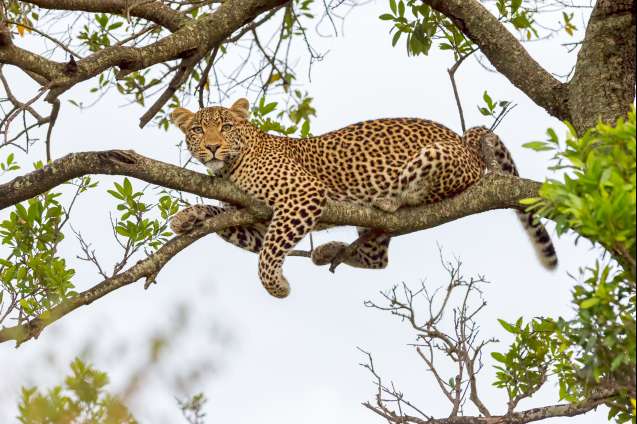
🐆 A Leopard in an Acacia Tree — Among the Most Sought-After Photography Opportunities When Exploring Things To Do In Masai Mara
9. Hippo Pools and Mara River Visits
Visiting the established hippo pools along the Mara and Talek rivers is one of the most reliable and spectacular things to do in Masai Mara. The Mara River system supports approximately 4,000 hippos — one of the highest densities in Africa — and the pools where they congregate create extraordinary wildlife spectacles available at any time of year.
What You’ll Observe at the Hippo Pools
- Hippo social dynamics: Dominant bulls maintaining pool territories, females protecting calves, younger males jostling for position — the constant low-level tension is engrossing
- Territorial battles: Full hippo confrontations, involving gaping displays of tusks that can exceed 50 centimetres, occasionally erupt. These are dramatic, noisy encounters
- Crocodile interactions: The 2,000+ Nile crocodiles sharing the river create constant environmental tension. The relationship between hippos and crocodiles is complex — often coexistence, occasionally conflict
- Evening emergence: Just before dark, hippos begin leaving the water to graze overnight on the plains. This is one of the most atmospheric wildlife moments in the reserve
- Bird diversity: Kingfishers, bee-eaters, herons, storks, and African spoonbills congregate around hippo pools in extraordinary density
10. Explore the Private Conservancies
The private conservancies bordering the Masai Mara National Reserve are one of the most underutilised and underappreciated things to do in Masai Mara. Covering over 600,000 acres of community-owned land managed in partnership with tourism operators, these conservancies offer experiences that are simply not available inside the national reserve.
What the Conservancies Offer That the Reserve Cannot
- Night game drives. Lights and trackers illuminate the nocturnal world — lions hunting, civets prowling, bushbabies in the acacia canopy, and the spectacular eye shine of dozens of animals simultaneously
- Walking safaris. The primary zone for Masai Mara walking safari experiences (as covered above) — intimate, expert-led, and legally permitted
- Vehicle exclusivity. Many conservancies operate an exclusive vehicle policy — if you are staying there, you may have entire areas entirely to yourself. No 15-vehicle pile-ups at lion sightings
- Off-road driving. Unlike the national reserve, conservancies permit off-road driving to follow animals into bush cover
- Direct conservation contribution. Conservancy fees go directly to Maasai landowners, providing economic incentive to maintain wildlife habitat rather than convert to agriculture
| Conservancy | Size | Special Feature | Max Vehicles |
|---|---|---|---|
| Naboisho | 50,000 acres | Very low vehicle density | Very low — exclusive feel |
| Olare Motorogi | 35,000 acres | High lion density, off-road permitted | Restricted — premium experience |
| Mara North | 74,000 acres | Diverse terrain, walking safaris | Controlled — conservancy permits |
| Lemek | 25,000 acres | Community-led, cultural integration | Very low — authentic experience |
| Mara Naboisho (combined) | 85,000+ acres | Largest private sanctuary in the Mara | Exclusive — premium camps only |
11. Night Game Drives — The Mara After Dark
Night drives are among the most exhilarating things to do in Masai Mara for visitors who have experienced standard game drives and want to go deeper. While not permitted in the core national reserve, they are available in most bordering conservancies and represent a completely different wildlife experience from anything the daytime offers.
Why Night Drives Are Worth It
- Nocturnal species: Serval cats, genets, civets, African wildcats, bushbabies, spring hares, and porcupines are invisible during the day and readily encountered at night with a spotlight
- Eye shine: A single scan of a spotlight across the plains at night reveals dozens of reflective eye pairs — an immediate illustration of how populated the Mara is when the vehicles park
- Active predators: Lions, leopards, and hyenas are genuinely more active between 9 PM and 2 AM. Observing a hunt in progress with a spotlight is among the most intense natural encounters available
- Atmosphere: The Mara at night, away from any camp or road, under the Southern Hemisphere sky is one of the most profoundly quiet places most visitors have ever experienced
- Star-gazing: At elevation, with zero light pollution, the Milky Way is a physical presence overhead. Many guides include a brief stop and star explanation on night drives
12. Best Time to Do Things in Masai Mara — Month-by-Month Guide
Understanding when to visit transforms your experience of things to do in Masai Mara. Every season offers distinct highlights — the question is matching what you most want to see with when you can travel.
⭐⭐⭐ July – October (Peak Season)
Masai Mara Great Migration season — 1.5 million wildebeest and river crossings. Peak predator density and activity. Clear skies, optimal photography light. Highest accommodation rates and most tourist traffic. Book 6–12 months in advance for preferred camps.
⭐⭐⭐ January – February (Calving Season)
Wildebeest calving in the Serengeti creates exceptional predator-prey interaction across the ecosystem. Resident Mara predators are highly active. Excellent value — 30–40% lower than peak season. Fewer vehicles. Reliable dry weather.
⭐⭐ November – December (Short Rains)
Lush green landscapes and excellent bird watching as Palearctic migrants arrive. Baby animals appear. Afternoon rains (typically brief) add drama to photography. Good value period with reduced crowds. Some access tracks may be soft.
⭐⭐ June (Late Dry Season)
The advance guard of the migration begins entering the north. Wildlife concentrating around permanent water sources. Excellent predator sightings. More affordable than July–October. Often overlooked — very good value for experienced safari visitors.
⭐ March – May (Long Rains)
Lowest accommodation rates of the year (50–60% below peak). Spectacular landscape photography with dramatic storm clouds. Exceptional bird watching. Some roads become challenging. Wildlife more dispersed. Best for serious photographers wanting dramatic skies on a budget.
13. Practical Tips for Getting the Most Out of Masai Mara
What to Pack for the Mara
- Neutral-coloured clothing (khaki, olive, beige) — avoid bright colours and white
- Warm layer for early morning drives (15–18°C at 6 AM in dry season)
- Telephoto lens (200mm minimum, 400–600mm ideal for wildlife)
- Binoculars 8×42 or 10×42 — essential even with camera equipment
- Sunscreen SPF 30+ and hat — equatorial UV is intense
- Insect repellent 25%+ DEET for evenings
- Anti-malarial medication — consult doctor 6 weeks in advance
- Power bank 20,000+ mAh — camps often have limited solar charging
Insider Tips from Armani Tours Guides
Follow the Vultures
Descending vultures indicate a kill within the last 30–60 minutes. Your guide monitors the sky throughout every drive. Ask them to explain what species of vulture and what it signals about the state of the kill below — this is one of the most valuable Mara tracking skills.
Watch the Prey Animals
Thomson’s gazelles staring in one direction, impalas with ears pinned forward and bodies rigid, zebras with heads raised and eyes wide — these are predator-alert postures your guide reads constantly. Learning to read prey behaviour turns you from a passenger into an active participant in the game drive.
Maximise Golden Hours
The hour after sunrise and the hour before sunset are the most productive for both wildlife and photography. If your camp offers flexibility, request earlier morning departures and later afternoon returns than the standard schedule.
Use Radio Networks
Ask your guide how the driver radio network works. Professional guides share information about rare sightings — rhinos, leopards with cubs, a cheetah hunt in progress. Understanding this network helps you appreciate why your guide suddenly changes direction without apparent reason.
Stay for Behaviour, Not Just Sightings
A lion photographed in 2 minutes and a lion watched for 45 minutes are entirely different experiences. The second involves watching the pride hierarchy in action, cubs interacting with adults, and possibly a hunt attempt. Time invested at single sightings consistently produces the most memorable outcomes.
Health and Safety Essentials
- Travel insurance with medical evacuation is non-negotiable — AMREF Flying Doctor services cover the Mara within 2–3 hours
- Kenya eVisa is available online at evisa.go.ke — apply at least 7 working days before travel
- Yellow fever certificate is required if arriving from endemic countries
- Never exit vehicles in the bush except at designated safe zones and with guide clearance
- Camp perimeter rules exist for genuine safety reasons — follow them absolutely
14–27: More Things To Do In Masai Mara at a Glance
The activities above cover the flagship experiences, but the full list of things to do in Masai Mara extends well beyond them. Here is a rapid-fire guide to additional experiences worth building into your itinerary:
🌿 Nature & Wildlife
- #14 — Cheetah Tracking: Request guide to prioritise cheetah sightings. Three days gives ~80% success probability
- #15 — Rhino Tracking (Mara Triangle): 30–40% chance with dedicated searching. Best in early morning
- #16 — Big Cat Behaviour Study: Stay 1+ hour at a leopard tree or lion pride — pure behavioural study
- #17 — Elephant Family Watching: Family groups with calves display extraordinary social complexity worth dedicated time
- #18 — Star-Gazing at Camp: Zero light pollution, 2,000-metre elevation, crystal-clear skies. The Milky Way is overwhelming
🎭 Culture & Comfort
- #19 — Bush Breakfast: Full breakfast served on the plains after dawn drive — tables, linens, outdoors
- #20 — Maasai Market Shopping: Authentic handcrafted beadwork, leather goods, walking sticks, and carvings
- #21 — Spa at Luxury Camp: Traditional Maasai-inspired treatments available at premium properties
- #22 — Swimming in the Bush: Many luxury camps feature plunge pools with wildlife views
- #23 — Conservation Talks: Evening presentations by resident naturalists at permanent camps
🚁 Adventure Add-Ons
- #24 — Microlight Flight: Available at select operators — lower altitude than balloon, more manoeuvrable
- #25 — Mountain Biking Conservancy Routes: Available in select conservancies — cycling through the bush with a guide
- #26 — Fly Camping: Sleeping under the stars in a lightweight bush camp, waking to animal sounds within metres
- #27 — Combine with Tanzania Serengeti: Cross-border safaris combining Mara and Serengeti represent the full migration experience. Explore multi-destination Kenya packages.
Plan Your Masai Mara Experience with Armani Tours and Travel
The things to do in Masai Mara described in this guide are all bookable, combinable, and customisable through Armani Tours and Travel. With over a decade of exclusive focus on Kenyan safari experiences, our team has the field knowledge, accommodation relationships, and guide network to build an itinerary that matches precisely what you want — at any budget level.
Why Travellers Choose Armani Tours and Travel
- Field-led expertise. Our guides average 8+ years in the Masai Mara specifically — not generic East Africa experience, but Mara-specific knowledge of prides, territories, and seasonal patterns.
- Transparent pricing. Every quote itemises costs with no hidden fees. We include what others charge as extras.
- Private and group options. From solo travellers joining shared vehicle departures to private family vehicles with dedicated guides — we match the experience to the group.
- Accommodation across all tiers. From well-maintained budget campsites to luxury conservancy lodges — with direct relationships at each, not booking through aggregators.
- Sustainable tourism commitment. A portion of every booking supports anti-poaching initiatives and Maasai community development.
How to Start Planning
Contact Us with Your Dates and Interests
Tell us when you want to visit, how many people, your budget range, and which specific things to do in Masai Mara are priorities — game drives only, balloon safari, cultural visits, walking, photography. The more detail you give us, the better we can customise.
Receive a Personalised Itinerary (within 24 hours)
You’ll receive a full day-by-day itinerary with accommodation options at each budget level, complete pricing breakdown, vehicle specifications, and guide assignment for private bookings.
Confirm with a Deposit
Secure your dates with a 30–50% deposit. We accept bank transfer, Visa, Mastercard, PayPal, and M-Pesa for Kenya-based clients.
Receive Pre-Departure Pack
Complete packing guide, health requirements, visa information, weather forecast, and emergency contacts arrive 2–3 weeks before departure.
The Masai Mara Is Unlike Anywhere Else
The things to do in Masai Mara covered in this guide represent a destination so rich in possibility that no single visit exhausts it. Game drives deliver extraordinary wildlife encounters on a near-daily basis. The Masai Mara Great Migration season adds a spectacle of biblical scale. Hot air balloon safaris Masai Mara offer perspective that permanently changes how you see the landscape.
Masai Mara walking safaris in the conservancies reveal an intimate version of the ecosystem invisible from the road. The Masai Mara cultural village experience introduces you to a people whose relationship with this wilderness stretches back centuries. And the Masai Mara sundowner bush picnic at the end of each day provides the perfect frame for everything witnessed between sunrise and dusk.
These experiences are not tourism products — they are direct encounters with a living system of extraordinary complexity. Every return visit to the Mara reveals something new, because the system itself never repeats. What draws people back, year after year, is not the ticking of a checklist but the feeling of being inside something real.
At Armani Tours and Travel, building that experience for every visitor — from first-timers to regulars — is the only thing we do. Contact us to start planning. The things to do in Masai Mara are waiting.
🌍 Your Masai Mara Adventure Starts Here
Game drives, balloon safaris, cultural villages, walking safaris, sundowners under the African sky. Tell us what you want — we’ll build your perfect Masai Mara itinerary.
📧 [email protected] · 📞 +254 722534853 · Windsor House, Mundi Mbingu Street, Nairobi
Frequently Asked Questions — Things To Do In Masai Mara
The top things to do in Masai Mara include morning and evening game drives for Masai Mara game drives and wildlife encounters, hot air balloon safaris, Maasai cultural village visits, walking safaris in bordering conservancies, sundowner bush picnics, river crossing viewings during the Great Migration, dedicated bird watching, and photography safaris. The full list extends to 27+ activities when you include night drives in conservancies, fly camping, microlight flights, and bush breakfast experiences.
The best time for a Masai Mara game drive is early morning between 6:00 and 9:00 AM when predators are most active after their nocturnal movements, or late afternoon from 4:00 to 7:00 PM during the golden hour when temperatures drop and animal activity surges. Both sessions consistently produce the highest wildlife encounter rates for Masai Mara game drives and wildlife sightings. Full-day drives are recommended when tracking specific animals or during the Great Migration season river crossings.
A hot air balloon safari Masai Mara typically costs $450–$500 per person. The price includes the one-hour dawn flight, a champagne bush breakfast on landing, and a flight certificate. Book at least 48 hours in advance during peak season; during the Masai Mara Great Migration season (July–October), securing your spot weeks in advance is advisable. Armani Tours and Travel can add a balloon safari to any standard safari package.
Yes — the Masai Mara Great Migration season is widely considered one of the greatest wildlife spectacles on Earth. Approximately 1.5 million wildebeest and 500,000 zebras cross between the Serengeti and the Mara from July through October, creating dramatic river crossing scenes that no documentary can fully capture. Even outside the peak July–October window, the presence of large herds on the Mara plains makes the things to do in Masai Mara exceptional throughout the dry season.
A Masai Mara walking safari is not permitted inside the core Masai Mara National Reserve itself, but is available in the private conservancies that border it — Naboisho, Olare Motorogi, Mara North, and Lemek, among others. These walks are conducted by Kenya Wildlife Service-certified armed rangers and offer intimate encounters with smaller wildlife, tracks, and plant ecology that vehicle safaris cannot provide. They run for 2–3 hours and cover 5–8 kilometres.
The primary cultural experience in Masai Mara is the Masai Mara cultural village experience — a visit to a traditional Maasai manyatta (homestead). Visitors observe traditional architecture, watch the adumu jumping dance, see fire-starting demonstrations, and purchase handcrafted beadwork and jewellery directly from artisans. Cost is typically $20–$30 per person. Armani Tours and Travel arranges visits to communities that specifically participate in cultural exchange programs, ensuring an authentic rather than staged experience.
The Masai Mara’s wildlife roster includes lions (98% sighting probability on a 3-day visit), African elephants (95%), African buffalo (92%), leopards (65–75%), cheetahs (~80%), black rhinos (30–40%), hippos, Nile crocodiles, Maasai giraffe, plains zebra, wildebeest, and over 570 bird species. It supports Africa’s highest predator density per square kilometre. Masai Mara game drives and wildlife encounters here consistently surpass what is possible in comparable reserves.
A minimum of 3 days is recommended to experience the best things to do in Masai Mara meaningfully. Three days allows for 5–6 game drives covering different sectors, one cultural village visit, and leisure time. Five to seven days is ideal for witnessing the Masai Mara Great Migration season, pursuing specific wildlife like rhinos or leopards, or combining activities including balloon safaris, a Masai Mara walking safari in conservancies, and sundowner experiences each evening.
A Masai Mara sundowner bush picnic is a traditional bush drinks stop at sunset, where your guide parks the vehicle at a scenic viewpoint — often a ridge or river bend — and serves drinks and light snacks while you watch the sky transform over the savannah. It is one of the most memorable things to do in Masai Mara and is typically included in Armani Tours and Travel safari packages. Premium versions involve full bush dinner service with tables and linens set on the open plains.
The simplest way to book things to do in Masai Mara is through a reputable tour operator like Armani Tours and Travel. Contact us via WhatsApp (+254 722534853), email ([email protected]), or the website booking form with your dates, group size, budget, and priority activities. We respond within 2 hours with a personalised proposal. A 30–50% deposit secures your booking, with full payment due 30–60 days before departure. We handle all logistics including transport, accommodation, park fees, and activity permits.
